8 Aug 2026
Synchronizing Behavioral Data Streams with Affiliate Payout Adjustments to Strengthen Casino Retention Across Regulated Jurisdictions
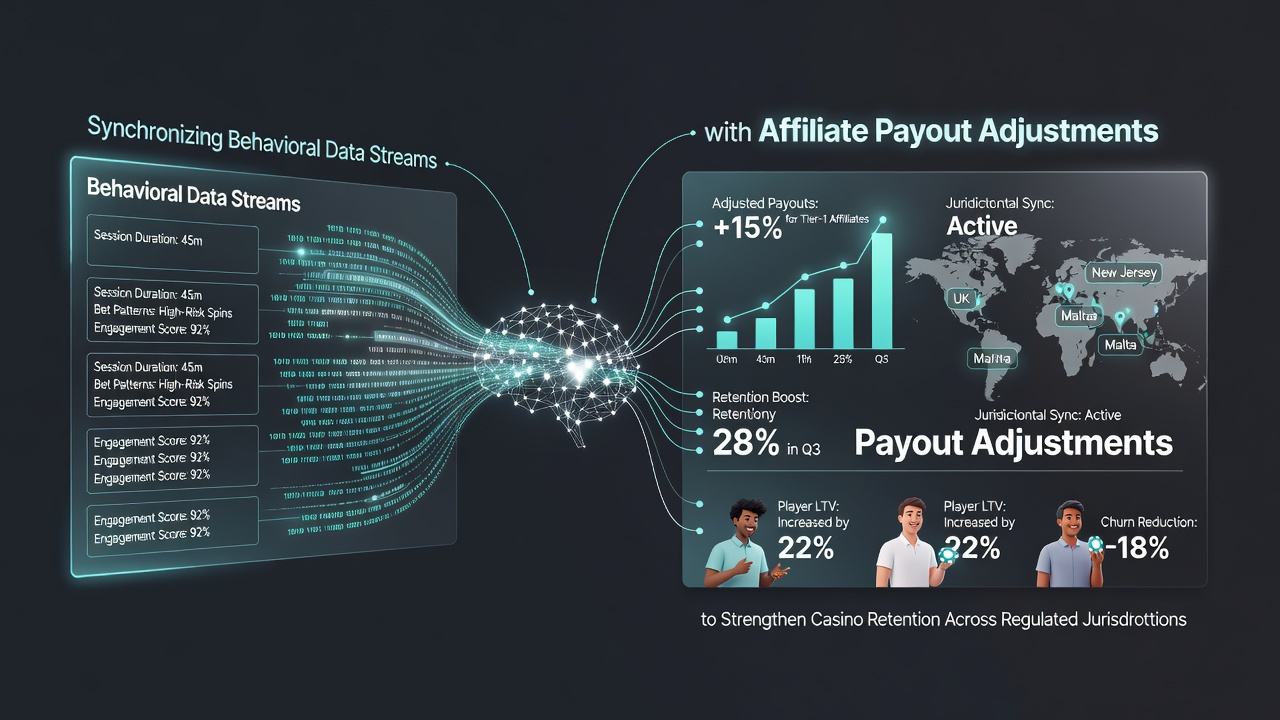
Casino operators in regulated markets continue to integrate behavioral data streams with affiliate compensation models, and this synchronization allows real-time adjustments that tie commission structures to player retention metrics. Data from multiple jurisdictions shows that platforms tracking session duration, deposit frequency, and game preference patterns can shift affiliate payouts from fixed CPA models toward hybrid rev-share arrangements that reward sustained activity rather than initial acquisition alone.
Data Integration Across Platforms
Operators connect player tracking systems with affiliate management software through APIs that update commission rates based on ongoing performance indicators, while compliance teams review these flows to meet requirements in each market. In August 2026, several multi-state operators reported completing upgrades that pulled live behavioral feeds into payout engines, and those updates produced measurable shifts in how affiliates received compensation for players who remained active beyond the first thirty days.
Research from the University of Nevada's gaming studies program indicates that synchronized systems reduce instances of bonus abuse by flagging irregular play patterns early, and affiliates then receive adjusted rates that reflect verified retention rather than inflated acquisition numbers. This approach aligns payouts with long-term value calculations that regulators in multiple regions examine during licensing reviews.
Regulatory Frameworks in Key Markets
Jurisdictions such as New Jersey and Pennsylvania require operators to maintain audit trails for any compensation tied to player data, and those trails must demonstrate that payout modifications follow documented behavioral thresholds. The Alcohol and Gaming Commission of Ontario has published guidelines that address similar data-sharing practices between operators and marketing partners, emphasizing consent management and data minimization principles that affect how behavioral streams feed into affiliate calculations.
Operators report that when affiliate commissions adjust dynamically, retention rates in tightly controlled markets improve because marketing partners focus on quality traffic instead of volume alone. Figures from industry reports reveal that platforms using these synchronized models recorded higher percentages of players completing at least five sessions within the initial sixty days compared with static payout structures.

Implementation Patterns Observed in 2026
Multiple operators began rolling out tiered affiliate structures during the first half of 2026 that lowered initial acquisition payments while increasing ongoing rev-share percentages for retained cohorts, and those changes required precise mapping of behavioral signals to commission triggers. Technical teams built validation layers that cross-checked deposit velocity against session length data before releasing adjusted payouts, and this reduced discrepancies that previously triggered regulatory queries.
One documented case involved a regional operator that synchronized its loyalty program database with affiliate portals, allowing commission adjustments whenever a referred player reached predefined activity milestones. Observers note that such systems demand continuous monitoring to avoid unintended bias in payout distribution across different player demographics.
Compliance Considerations
Regulated environments require that any data used for payout decisions undergoes independent verification, and operators typically engage third-party auditors to confirm that behavioral streams match reported outcomes. European operators following the European Gaming and Betting Association standards must also ensure that affiliate contracts specify data usage limits, and those clauses now frequently reference retention-based adjustments as a core compliance element.
Systems that link behavioral data directly to affiliate compensation continue to expand because they provide traceable records that satisfy both marketing performance reviews and regulatory oversight. Operators in multiple jurisdictions maintain separate data environments for behavioral analytics and financial settlements to prevent cross-contamination during audits.
Conclusion
Synchronization of behavioral data streams with affiliate payout adjustments has become a standard operational practice in regulated casino markets, and the approach supports retention goals while meeting documentation requirements across jurisdictions. Operators that maintain clear mappings between player activity metrics and compensation tiers continue to demonstrate compliance during licensing renewals and ongoing oversight. The pattern established through 2026 shows that precise integration reduces friction between marketing partners and regulatory expectations when retention forms the basis for ongoing financial arrangements.