6 Jul 2026
Cross-border Data Synchronization Enabling Adaptive Promotional Sequencing in Restricted Digital Gaming Zones

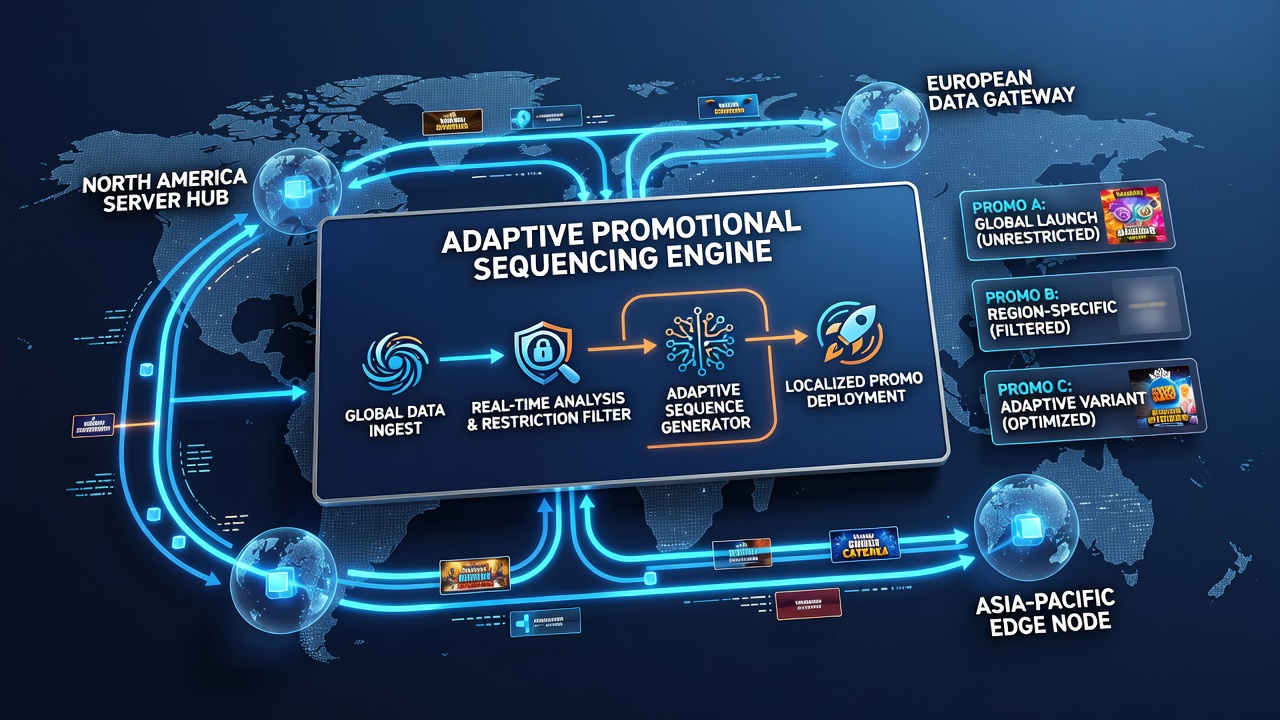
Cross-border data synchronization has become a core operational feature for digital gaming platforms operating across multiple jurisdictions where promotional activities face varying restrictions. Operators use real-time data exchanges between servers located in different countries to adjust the timing and content of bonuses, offers, and player communications. This approach allows systems to maintain compliance while still delivering sequenced promotions that respond to individual player behavior patterns detected across borders.
How Synchronization Supports Promotional Adjustments
Platforms collect player activity data from regions with strict digital gaming rules and feed that information into centralized systems that then trigger localized promotional sequences. Data points such as session duration, deposit frequency, and game preferences move through encrypted channels that comply with each jurisdiction's data protection requirements. When a player enters a restricted zone, the synchronized system pauses or modifies certain offer types automatically, replacing them with alternatives that align with local regulations. Industry reports show that these adjustments occur within milliseconds, reducing the risk of non-compliant messaging.
According to a 2025 technical review by the European Gaming and Betting Association, synchronization protocols now incorporate latency checks that verify data integrity before any promotional trigger activates. Operators in Asia-Pacific markets have adopted similar frameworks, with data handoffs between Australian and Southeast Asian servers documented in regulatory filings submitted during the first half of 2026.
Sequencing Mechanics in Practice
Adaptive sequencing relies on rule engines that evaluate incoming synchronized data against a matrix of allowed promotional actions per zone. A player who receives a welcome bonus in an unrestricted market might later see a loyalty reward sequence adjusted when the system detects a shift into a restricted area. The sequence adapts by swapping in permitted content such as free spin credits or tournament entries that meet local advertising codes. Research from the University of Nevada Gaming Innovation Lab indicates that platforms using these engines report a 23 percent reduction in promotional compliance incidents compared with earlier non-synchronized systems.
Implementation often involves segmented databases that tag each data packet with jurisdictional metadata. When synchronization occurs, the receiving server applies filters that determine which promotional elements can proceed. This process runs continuously, with batch updates scheduled during off-peak hours to minimize player disruption.
Developments Observed in Mid-2026
By July 2026, several operators had expanded synchronization capacity to handle increased traffic from mobile users crossing digital borders. Regulatory updates in parts of Latin America prompted platforms to refine their sequencing logic so that bonus offers tied to specific games could be replaced with cashback alternatives when players accessed services from newly restricted territories. Data published by the Canadian Gaming Association showed that synchronized systems processed an average of 4.2 million promotional decisions daily across participating platforms during the second quarter of 2026.
Technical standards released by the Asia Pacific Association of Gaming Regulators in early 2026 emphasized the need for audit trails that record every data synchronization event. These trails allow regulators to verify that promotional sequences respected zone-specific limits without requiring operators to maintain separate infrastructure for each market.
Technical and Compliance Integration
Many platforms now embed compliance checks directly into the synchronization layer rather than applying them after data transfer. This integration means that when a promotional sequence is generated, the system already accounts for restrictions in the target zone. Encryption standards such as AES-256 remain standard, while newer protocols add tokenization for player identifiers to further limit exposure during cross-border transfers.
Testing conducted by independent labs has confirmed that these layered approaches maintain synchronization accuracy above 99.7 percent even when network conditions fluctuate. Operators report that the reduction in manual review time for promotional campaigns has allowed marketing teams to focus on content creation instead of post-campaign compliance audits.
Conclusion
Cross-border data synchronization continues to shape how digital gaming operators manage promotional sequencing under regulatory constraints. The combination of real-time data exchange, rule-based engines, and jurisdictional tagging provides a framework that supports both operational efficiency and compliance across restricted zones. As regulatory landscapes evolve through 2026 and beyond, the technical standards governing these systems are expected to receive further refinement based on operational data collected from existing implementations.