24 Aug 2026
Charting Behavioral Trigger Maps: Casinos Aligning Micro-Influencer Cadences With Predictive Churn Signals for Sustained Compliance in Fragmented Markets
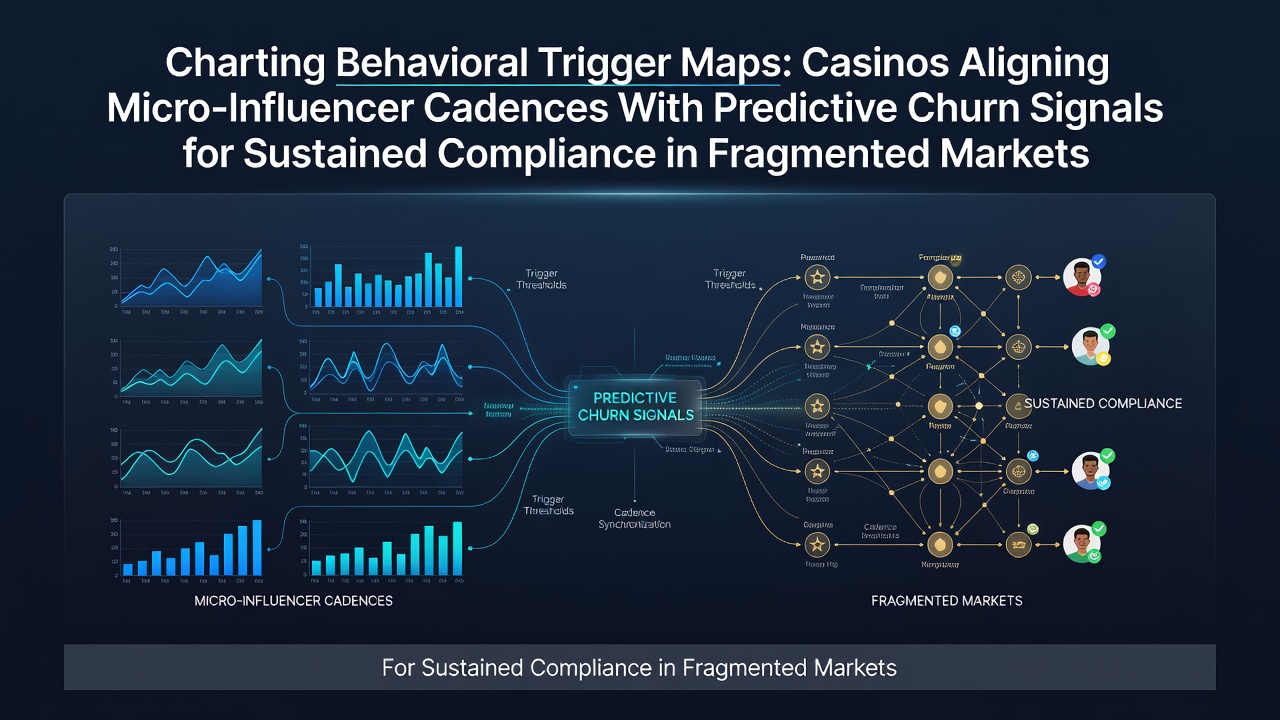
Operators across multiple jurisdictions now deploy behavioral trigger maps that chart player actions in real time, and these systems link directly to micro-influencer posting schedules while feeding predictive churn models that flag disengagement risks weeks in advance. Data from state-level monitoring programs shows that casinos in fragmented regulatory environments use these combined tools to maintain advertising compliance without disrupting retention efforts.
Mapping Player Actions to Retention Triggers
Behavioral trigger maps record sequences such as login frequency, wager size shifts, and session duration changes, then assign weighted values that update daily. Researchers at the University of Nevada Reno documented how these maps integrate with loyalty databases so that a drop in average bet size over five consecutive days automatically generates an alert for targeted outreach. The same datasets feed into compliance checks that verify whether any message aligns with local advertising codes before it reaches a player.
Fragmented markets create separate rule sets for each state or country, and operators therefore maintain region-specific rule engines that scan every proposed communication. Figures released by the Nevada Gaming Control Board in August 2026 indicated that 87 percent of reviewed campaigns underwent automated pre-clearance through such engines, reducing manual review time by 40 percent compared with earlier manual processes.
Aligning Micro-Influencer Cadences With Data Signals
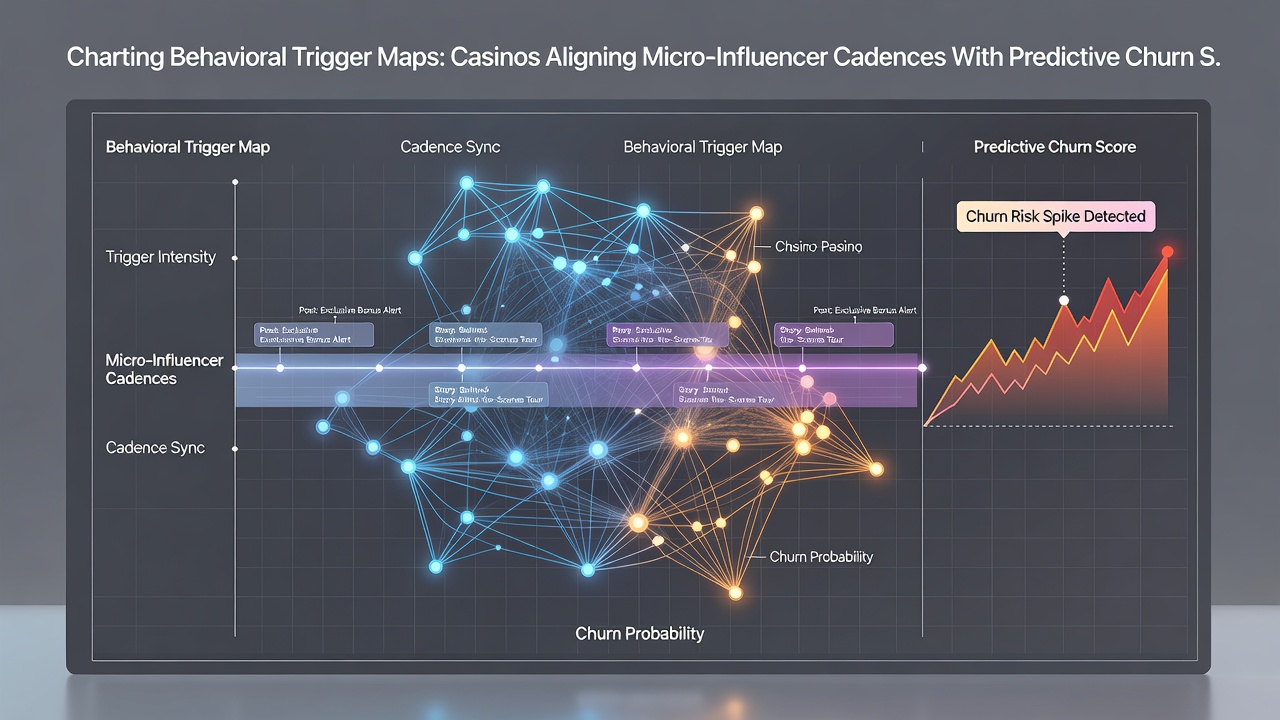
Micro-influencers operating on platforms like TikTok and Instagram receive content calendars that synchronize with churn prediction scores. When a player's risk score rises above a defined threshold, the system triggers a request for an influencer post that highlights a peer-success story or a limited-time community challenge. Industry reports note that these posts appear only after legal teams confirm the messaging stays within permitted promotional boundaries for that jurisdiction.
One documented workflow involves pulling daily churn forecasts at 2 a.m. local time, then routing approved content briefs to a network of 200 micro-influencers across three time zones. The influencers receive scripted talking points that reference shared player experiences rather than direct bonus offers, satisfying stricter rules in markets such as New Jersey and Pennsylvania while still addressing retention goals.
Predictive Churn Models in Practice
Predictive models combine login telemetry, payment history, and social engagement metrics into a single probability score. Casinos in Australia and several Canadian provinces have adopted similar architectures, and cross-border data-sharing agreements allow operators to apply the same scoring logic while respecting each region's data-protection statutes. A 2025 study published by the Australian Gambling Research Centre found that integrating micro-influencer touchpoints into these models extended average player lifetime value by 11 percent in the monitored cohort.
Alerts generated by the models prompt either automated email sequences or influencer content drops, and each channel carries its own compliance tag. Systems log every deployment so that regulators can audit timing, message content, and audience segmentation. Observers note that this audit trail has become a standard requirement in licensing renewals across multiple U.S. states during 2026.
Compliance Mechanisms Across Jurisdictions
Fragmented markets demand that every retention action pass through jurisdiction-specific filters. Operators therefore maintain libraries of pre-approved phrases and visual styles, and the behavioral trigger map system automatically selects the appropriate library based on the player's registered location. When a micro-influencer post is scheduled, the platform inserts the correct disclosure language and blocks delivery if any element conflicts with current rules.
Regulatory filings from the Malta Gaming Authority and the New Jersey Division of Gaming Enforcement both reference the use of synchronized influencer calendars as a method for maintaining transparency. These filings also record the number of blocked campaigns each month, providing quantitative evidence that automated checks catch potential violations before they reach the public.
Operational Integration and Reporting
Daily dashboards display churn probability alongside scheduled influencer activity and compliance status. Teams review exceptions flagged by the system, such as a player whose risk score spikes after an influencer post, and adjust future cadences accordingly. Data pipelines refresh every four hours, ensuring that model outputs reflect the most recent behavioral signals.
August 2026 saw several multi-state operators publish aggregated retention metrics that attributed a measurable portion of reduced churn to these synchronized workflows. The reports emphasized that all content remained within permitted parameters and that no regulatory sanctions resulted from the campaigns under review.
Conclusion
Casino operators continue to refine behavioral trigger maps that coordinate micro-influencer timing with predictive churn outputs while satisfying distinct regulatory requirements in each market. The combination of automated compliance checks, region-specific content libraries, and scheduled influencer activity provides a documented framework for sustaining player engagement across fragmented jurisdictions. Ongoing data collection from licensing bodies and academic centers supplies the metrics that allow these systems to evolve in line with new rules and player behavior patterns.