15 Jul 2026
Adapting Affiliate Commission Models to Incorporate Predictive Player Behavior Data in Restricted Advertising Zones

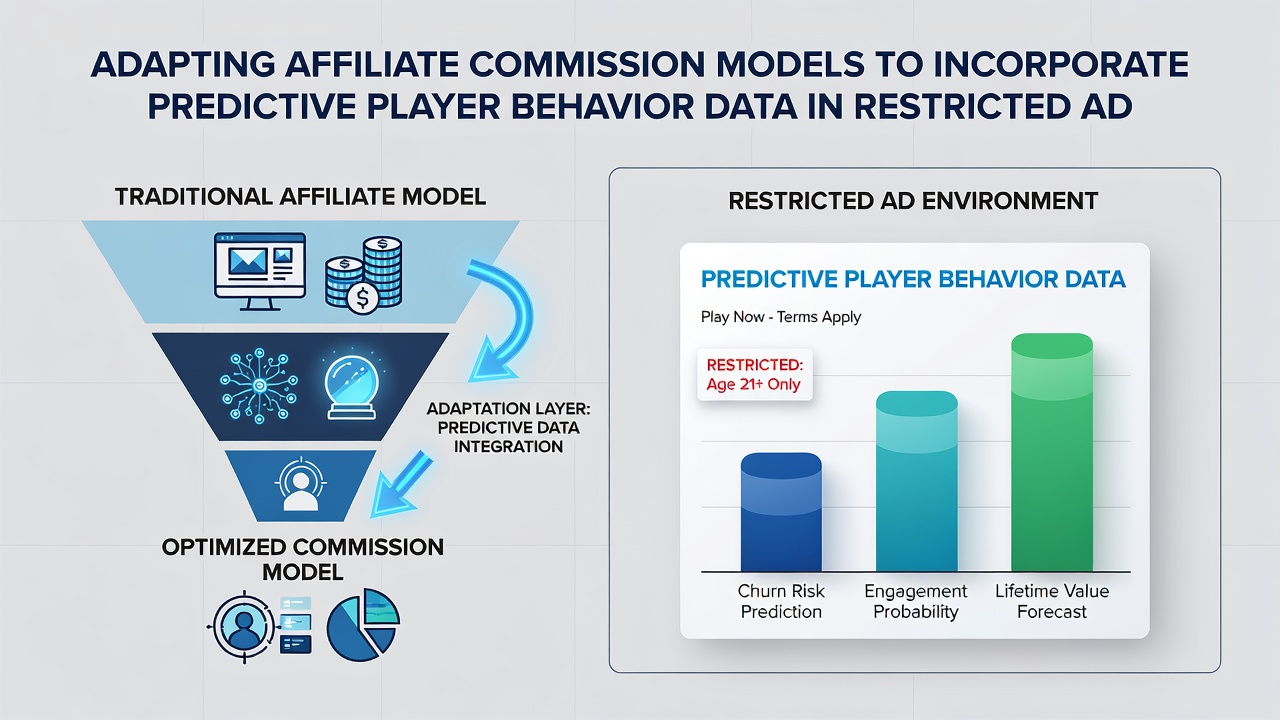
Operators in tightly controlled markets have begun folding predictive player behavior data into affiliate commission structures, and the shift shows up most clearly in zones where traditional advertising faces outright bans or heavy geo-fencing. Regulatory pressure in several jurisdictions has forced marketing teams to rely less on broad campaigns and more on precise performance payouts that reward affiliates only when predicted player value materializes over time.
Regulatory Pressures Driving the Change
By July 2026 several U.S. states and Canadian provinces had tightened rules around online casino promotions, limiting paid search, social placements, and display networks in designated areas. Figures from the Alcohol and Gaming Commission of Ontario reveal that affiliate-driven traffic now accounts for more than 60 percent of new player acquisition in provinces where direct advertising remains restricted. Those same data sets also indicate that standard revenue-share deals frequently overpay partners when player cohorts churn faster than historical averages suggested.
Predictive Models and Commission Structures
Modern commission frameworks now blend classic CPA, rev-share, and hybrid tiers with machine-learning outputs that forecast lifetime value, predicted deposit frequency, and session length. One study released by the University of Nevada, Las Vegas gaming research center tracked more than 180,000 players across six operators and found that models using real-time behavioral signals improved commission accuracy by 27 percent compared with static rev-share formulas. Affiliates still receive upfront payments, yet a growing slice of total compensation sits in escrow until the player meets or exceeds the model's projected value threshold.
Data Inputs That Shape Payouts
Operators feed several data streams into the prediction engines. Deposit velocity during the first seven days, game-type preferences, and cross-device login patterns all contribute to a composite score. When that score falls below a predefined band, the affiliate's effective commission rate drops automatically. Conversely, players who exceed projections unlock bonus tiers that can reach an extra 8 to 12 percent of net gaming revenue. The adjustments occur weekly rather than monthly, giving partners quicker feedback on campaign quality.
Implementation Examples Across Markets
In jurisdictions where sweepstakes-style models operate alongside traditional iGaming, several operators have introduced tiered bonus sequences triggered only after the predictive model flags a player as low-risk for early churn. Affiliates receive notification when a referred player graduates from one tier to the next, and commission percentages adjust accordingly. European operators facing similar advertising caps in certain member states have adopted comparable systems, though payout bands differ because local data-protection rules limit the granularity of player identifiers shared with partners.
One notable case involved an operator active in multiple Australian states. After linking predictive outputs to its affiliate portal, the company reported a 19 percent reduction in total affiliate spend while maintaining the same volume of first-time depositors. The savings stemmed from lower payouts on cohorts that the model correctly identified as likely to reduce activity after the welcome bonus period.
Technical and Compliance Considerations
Building these systems requires secure data pipelines that separate personally identifiable information from the behavioral signals passed to affiliate dashboards. Most platforms now use hashed user tokens and aggregate cohort reporting so that partners never receive raw player records. Compliance teams review model logic quarterly to ensure that commission adjustments do not inadvertently favor one demographic over another, a requirement highlighted in recent guidance issued by state gaming boards in New Jersey and Pennsylvania.
Future Outlook
Industry observers expect further refinement as more operators integrate cross-platform data from loyalty apps and land-based properties. The same predictive layers already used for churn modeling inside casino loyalty ecosystems are being repurposed to set affiliate compensation caps in advertising-restricted zones. As additional jurisdictions finalize rules through the remainder of 2026, commission structures that ignore behavioral forecasts appear likely to become less competitive.
Conclusion
The move toward behavior-linked affiliate payouts reflects a broader industry pattern of aligning marketing costs with measurable long-term value rather than acquisition volume alone. Data from multiple regulatory and academic sources shows measurable efficiency gains when operators apply these models inside restricted zones, and the approach continues to spread as more markets impose advertising limits.